share this
Most Workplace leaders trying to increase office attendance have already tried the obvious fix: better amenities. A nicer breakroom, upgraded coffee, maybe a full work cafe with real food service. It's a reasonable instinct, and it isn't wrong exactly, but recent workplace research from CBRE puts a more useful frame around the decision. Amenities matter. They are just not the reason people show up. Understanding that distinction changes how a company should budget for, design, and furnish an amenity space, and it's worth getting right before anyone signs off on a project.
WHAT ACTUALLY GETS PEOPLE BACK IN THE OFFICE
CBRE's 2026 workplace research found that collaboration with colleagues is the to reason employees choose to come into the office, cited by 68 percent of respondents. In-person meetings followed at 58 percent. Individual focus and concentration, often used to justify investment in quiet rooms and phone booths, ranked lower at 52 percent.
None of that is about the coffee bar.
The strongest driver off attendance is still the work itself: who is in the room, what's being decided, and whether being physically present changes the outcome. A workplace leader trying to move attendance through design alone, without addressing scheduling, team anchor days, or manager expectations, is solving the wrong problem first.
SO WHERE DO AMENITIES ACTUALLY FIT IN?
This is where the data gets useful instead of discouraging. CBRE's research describes amenities as enablers, not drivers. They don't pull people into the building on their own, but they change what happens once people are already there. Cafes and restaurants ranked as the most valued workplace amenity at 57 percent, well ahead of free parking at 29 percent and informal pantries or kitchenettes at 25 percent. More elaborate multi-purpose spaces and wellness amenities ranked lower, at 14 percent and 13 percent, a sign that novelty amenities are losing ground to the ones that solve a daily, practical need: getting a decent meal without leaving the building.
WHY THIS DISTINCTION MATTERS FOR THE BUDGET CONVERSATION
This is a useful reframe for anyone building a business case for a work cafe, a renovated break room, or a full amenity floor. Return on that investment shouldn't be measured against attendance numbers alone. It should be measured against what happens to the people who are already coming in: are they staying longer, meeting more easily, spending less time driving off campus for lunch and more time working or connecting with colleagues. That a real, defensible outcome, and it's a different pitch than "build it and they will come."
WHAT THIS LOOKS LIKE IN PRACTICE
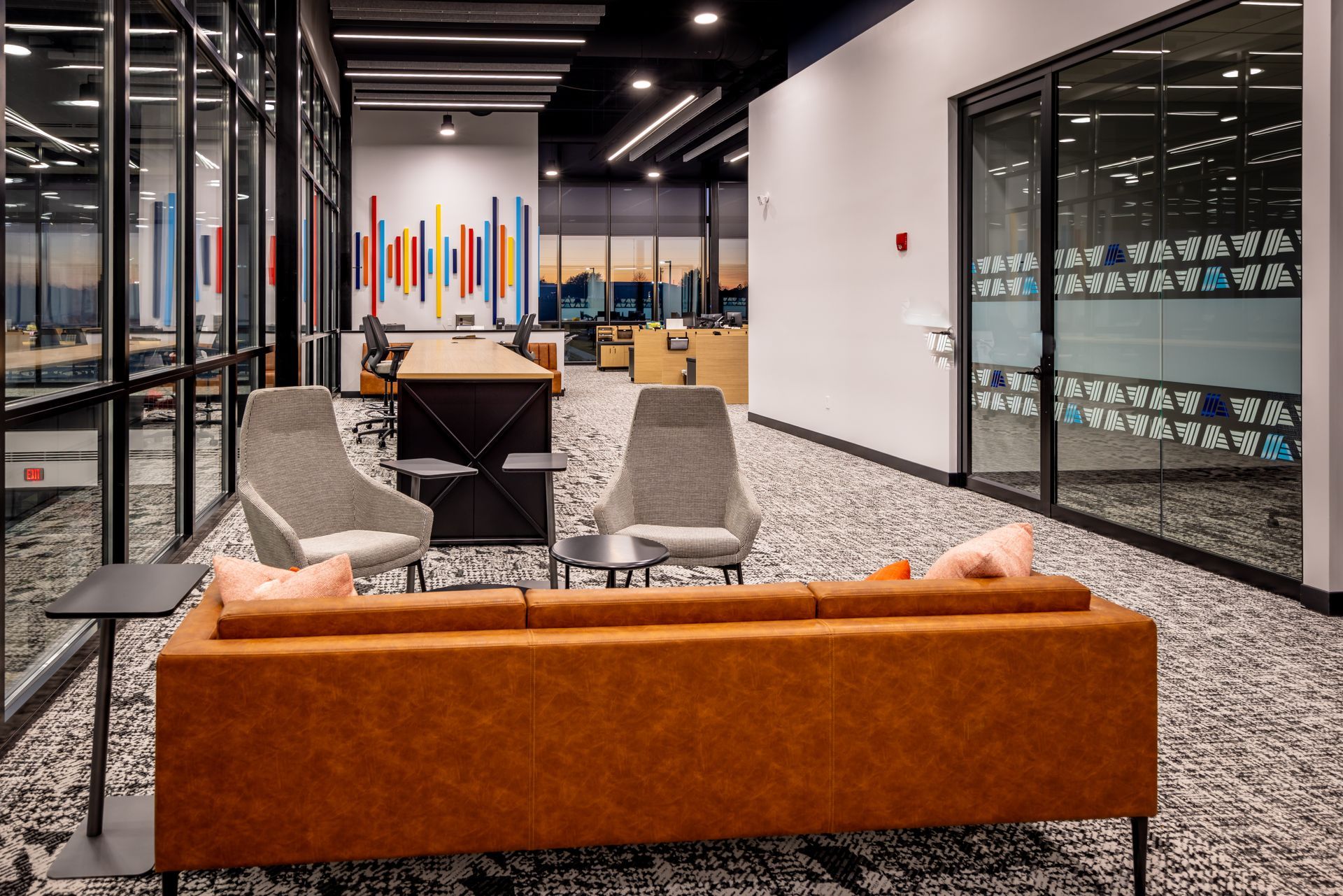
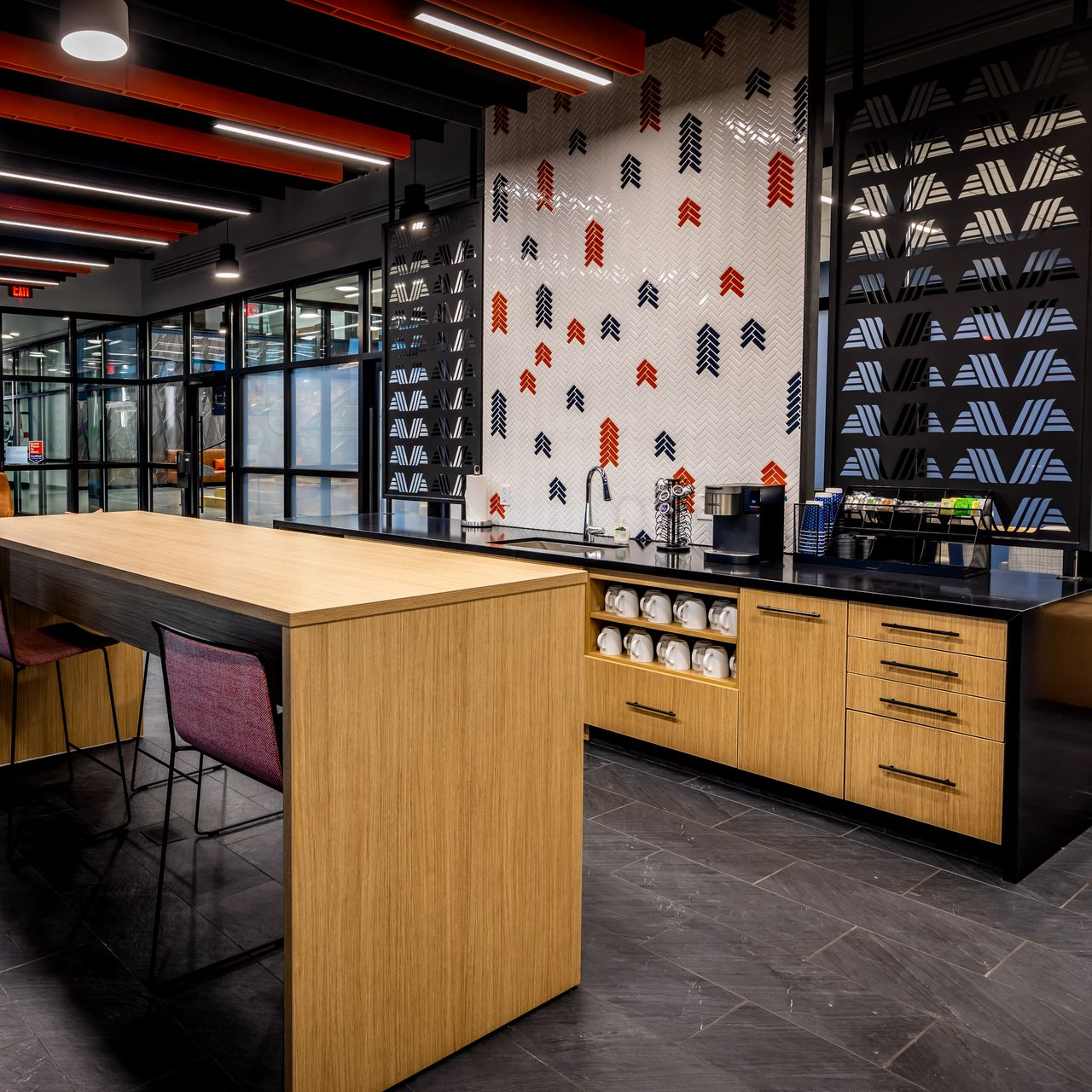
KDI worked through this exact kind of project with ALDI, designing and furnishing an entirely new building at its Batavia, Illinois headquarters build around a work cafe and meeting center. The scope covered design services along with furniture selection, procurement and installation, with a straightforward goal: give people who are already on campus a reason to gather, eat, and meet without leaving the building. That's the enabler model in practice. The space wasn't designed to compete with a home office. It was designed to make being on-site easier and more efficient for people already committed to being there.
questions to ask before investing in a work cafe or amenity space
A few questions are worth working through with your design and furniture partner before committing budget:
- What behavior are we actually trying to change: attendance, dwell time, cross-team interaction, or something else?
- Who uses this space at 8am, at noon, and at 4pm, and does that furniture plan support all three?
- Does the food and beverage program require plumbing, ventilation, or equipment that changes the construction scope and budget?
- How does furniture selection affect daily maintenance and durability in a space with heavy food and coffee traffic?
- Is this space flexible enough to double as overflow meeting space, not just a cafe?
WHERE DESIGN & FURNITURE STRATEGY COME TOGETHER
This is also where having design and furniture handled by one team matters more than it might seem. A work cafe or amenity space lives or dies on details that sit right at the intersection of design and furniture: seating that holds up to spills, layouts that let a lunch rush and a working meeting happen in the same room without competing, finishes that are easy to maintain daily rather than only photograph well. When those decisions are made by separate vendors on separate timelines, those details are usually the first thing compromised. An integrated process catches them before they become a maintenance problem six months after opening.
THE BOTTOM LINE
Amenities aren't a shortcut to a fuller office. They're a tool for making the time people already choose to spend there better. Companies that treat amenity investment that way tend to get a space that earns its budget, instead of one that photographs well and sits empty by 2pm.
If your team is weighing a work cafe, breakroom overhaul or amenity floor and wants a second opinion on scope before committing budget, that's exactly the kind of conversation KDI has with clients early and often.
Awesome. Interiors. Start. Here.
New Title
connect with us
Latest Posts