share this

Law Office of Kelley V. Flinn
In a competitive multi-family market, the leasing office does more than hand out brochures and collect applications.
It sets the tone for the entire community.
Before a prospect sees a unit, an amenity space, or a view, they experience the leasing office. And in that short window, often just a few minutes, opinions are formed, assumptions are made, and decisions start taking shape.
Well-designed leasing offices don’t just support the leasing team. They actively help close deals.
First Impressions Are Doing More Work Than You Think
Leasing decisions are rarely made on logic alone. They’re influenced by emotion, comfort, and trust.
A leasing office that feels warm, organized, and intentional immediately builds credibility. One that feels cluttered, dated, or transactional can quietly undermine confidence, even if the units themselves are strong.
From the moment a prospect walks in, the space should reinforce three things: professionalism, transparency, and care. Those signals matter long before pricing or availability is discussed.
Design the Leasing Office as a Journey, Not a Room
High-performing leasing offices are designed with flow in mind.
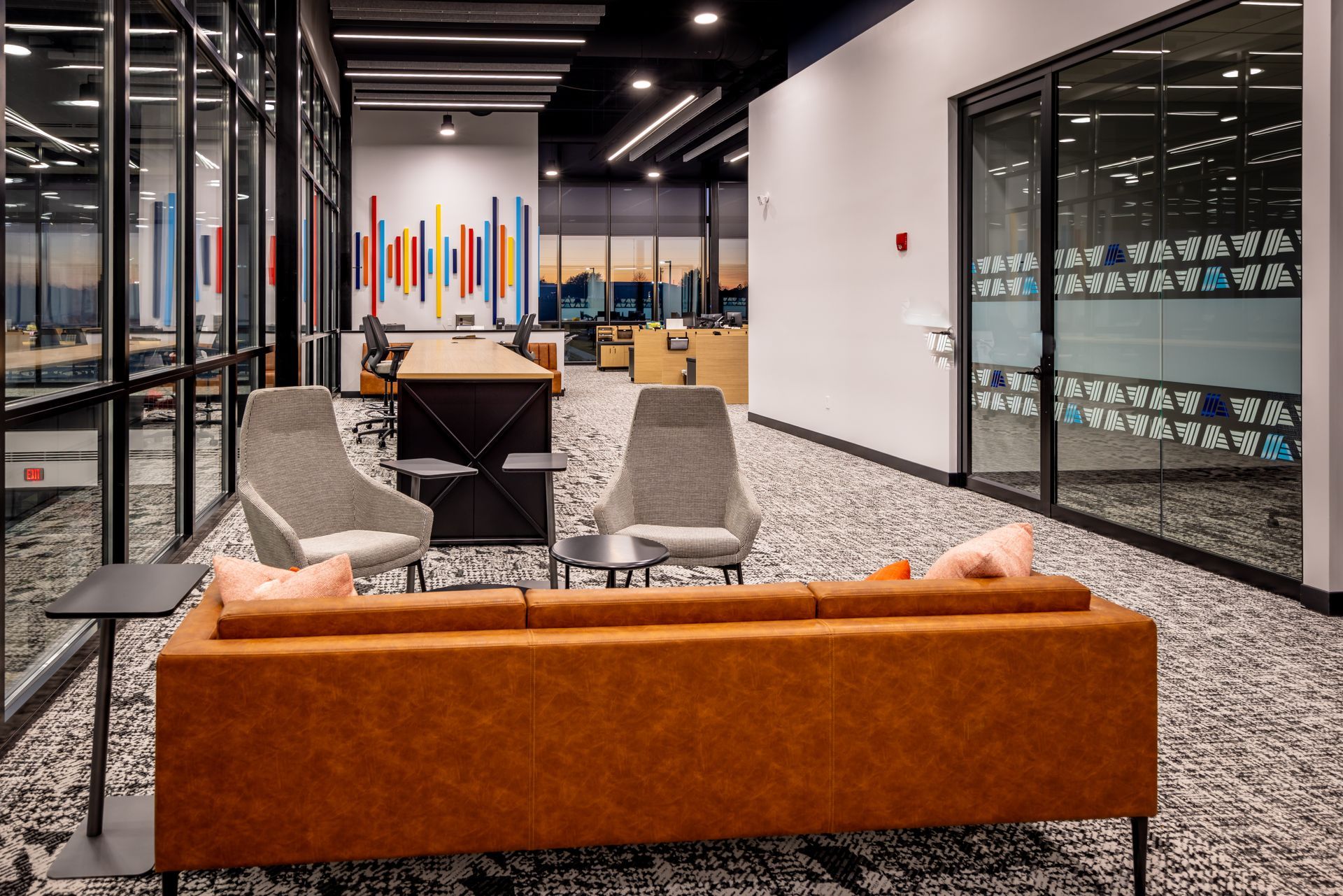
The arrival experience should feel intuitive. Clear sightlines, welcoming seating, and an obvious point of contact reduce anxiety and help prospects feel at ease. Once inside, the space should naturally guide conversations, tours, and next steps without feeling scripted.
This might include:
- Comfortable seating areas that encourage conversation rather than interrogation
- A clear but subtle separation between work zones and guest-facing spaces
- Visual cues that preview the lifestyle of the building without overwhelming the room
When the leasing office feels effortless to navigate, prospects stay focused on the experience, not the process.
Hospitality Thinking Changes the Leasing Dynamic
The most effective leasing offices borrow heavily from hospitality.
That doesn’t mean luxury finishes everywhere. It means prioritizing comfort, warmth, and attentiveness. Soft seating instead of stiff guest chairs. Thoughtful lighting instead of harsh overhead fixtures. Materials that feel residential-adjacent rather than corporate.
When prospects feel welcomed rather than sold to, conversations shift. Leasing teams become guides rather than gatekeepers. That change in dynamic can significantly impact conversion.
Support the Leasing Team’s Workflow
Design that converts doesn’t just look good, it works hard behind the scenes.
Leasing teams need spaces that support focus, privacy, and efficiency. Poorly planned back-of-house areas can lead to visible clutter, awkward pauses, or rushed interactions.
Thoughtful design considers:
- Technology placement that supports presentations and applications without interrupting conversation
- Storage solutions that keep materials accessible but out of sight
- Acoustic separation for sensitive discussions
When the leasing team is supported, they can stay present with prospects. That presence builds trust.
Show Lifestyle Without Overexplaining It
Leasing offices are most effective when they subtly preview life in the building.
Rather than relying on posters or lengthy explanations, the space itself should reflect the tone of the community. Furniture style, material palette, lighting, and layout all communicate what living there feels like.
A modern, social building might use flexible seating and open sightlines. A more refined or boutique property may lean into quieter, more tailored environments.
When design does the storytelling, leasing teams don’t have to oversell.
Flexibility Matters More Than Square Footage
Leasing offices often need to do more with less.
They host tours, handle paperwork, support team operations, and sometimes double as community touchpoints. Spaces designed with flexibility in mind perform better long-term.
Movable furniture, adaptable meeting zones, and integrated technology allow leasing offices to evolve as needs change, without requiring renovation every few years.
Conversion Is Built on Confidence
At the end of the day, people lease where they feel confident.
Confident in the property. Confident in the management. Confident that the experience they’re shown will match the experience they’ll live.
Design plays a critical role in building that confidence. When a leasing office feels intentional, welcoming, and aligned with the rest of the building, it reinforces the decision prospects are already hoping to make.
That’s when tours turn into leases.
Awesome. Interiors. Start. Here.
New Title
connect with us